Showing posts with label space. Show all posts

10.08.2013

Shanghai Street Food

Shanghai Street Food

During the summer, when I told people that I was going to (or recently returned from) Shanghai, I was often immediately asked about food, and sometimes specifically about street food.

If you know much about me, then you know that I’m a food utilitarian. I eat for calories. I simply don’t care much about food beyond sustenance. This does not mean that I don’t enjoy food; I do. I enjoy the things I eat every day so much that I eat almost the same things, every day. But I am no foodie.

I will try almost anything, and Shanghai presented many opportunities for new culinary experiences. About the only thing I had that was challenging was stinky tofu during breakfast. Served cold, this everyday snack actually smelled fine to me—and was quite wonderful when it hit my tastebuds. On it’s way down my esophagus, however, it exploded in a kind of fermented, spicy, heartburny miasma. Despite that, I’d probably try it again…

As it turned out, just outside the West Gate of the Baoshan campus of Shanghai University, about a 1.5 mile walk from where I stayed and taught, is Jufengyuan Road, and area that Shanghaiist calls one of Shanghai’s street food meccas. I came to know this area well, visiting daily.

As the Shanghaiist post notes,

The actual Jufengyuan strip isn’t even the main attraction with its fruit wagons, skewer carts, etc. The real deal begins at the alleyway just right of the bridge connecting Shanghai Uni’s west entrance to Jufengyuan Lu - identifiable by the covered picnic tables, shrouds of steam, and scraping of woks. Here, you’ll find fried noodles and rice galore, shawarma, skewers, Chinese breakfast crepes aka jianbing , fried chicken, and our favorite, big Xinjiang skewers with ribs, chicken legs, and other animal parts spitted on medieval-looking metal swords.

This area is amazing. The smells, the open flames, the masses of people moving about carrying xialongbao and sizzling chicken and steaming soups—it’s essentially what I envisioned when conjuring the phrase “Shanghai street food,” and it was incredible that I was within walking distance for two weeks. And while I came to appreciate one stall’s very spicy noodles, I was much more interested in simply being there than in sampling all of the food on offer—the street food scene along Jufengyuan Lu was atmospheric, enveloping, all-encompassing.


At this point, I want to write a few words about my experiences with street photography in Shanghai before I share some photos of the street food scene…

I never felt unsafe during my brief time in Shanghai, even though I stumbled into areas of the city where tourists and laowai are rarely seen. However, there were a couple encounters that I’d describe as “dicey,” and each involved my use of a camera at the time.

I’m fairly conspicuous as a street photographer; I love to shoot in low light and at night, and I’m a stickler for sharpness and legibility. This means that I typically stand out—with a big Manfrotto tripod, a Nikon D7000, a wireless shutter release, and a tendency to shoot low angle, wide frame shots. In other words, people can easily see what I’m doing, and in the process, they may become curious, shy, amused, etc.
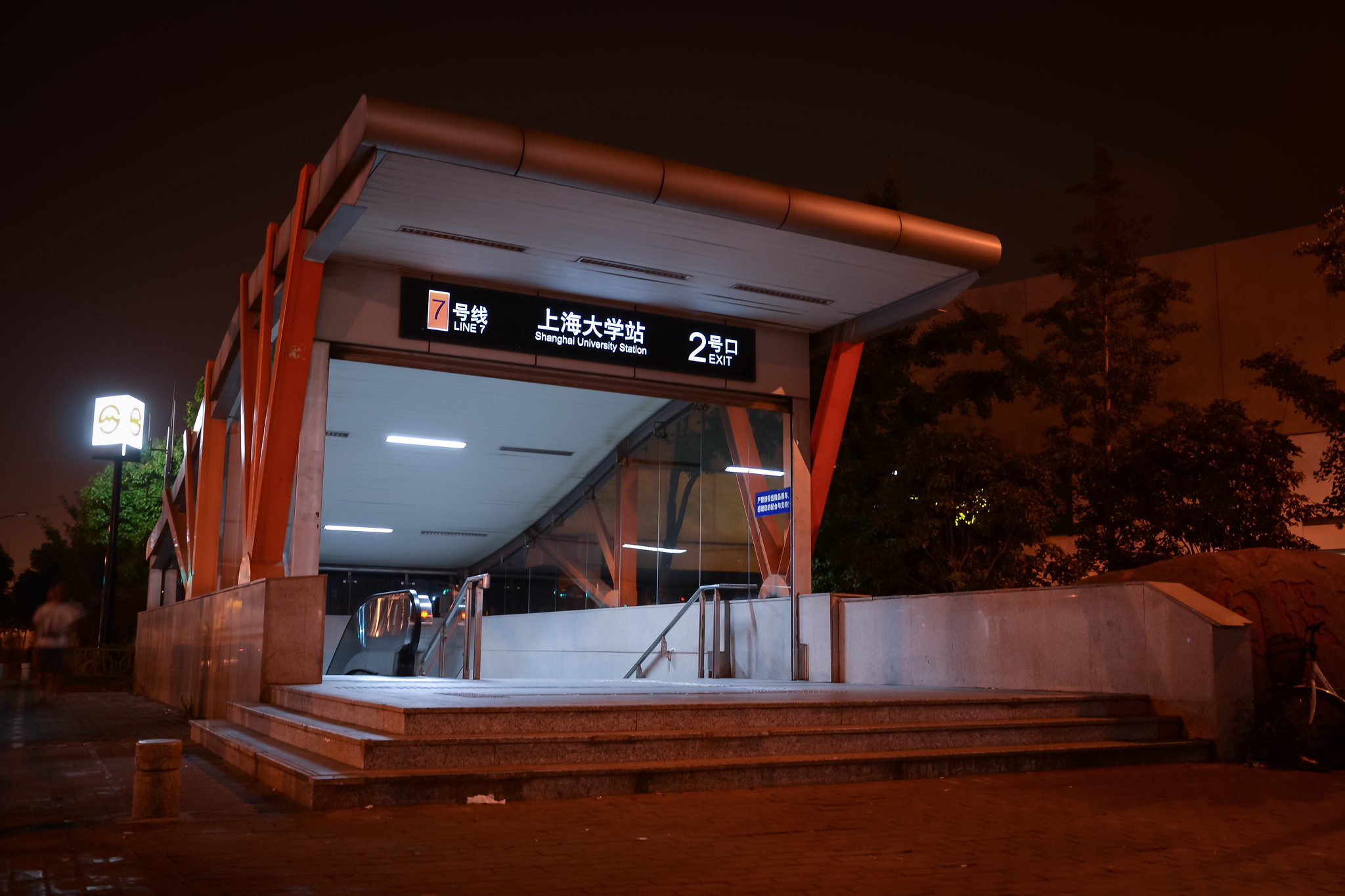
This shot, for example, was taken in front of about 25 scooter taxis and their drivers—to the left of frame, and behind the camera—all facing me as I set up, and all watching me with interest. This was photography in front of an audience, and after I made a couple of acceptable shots, I moved along the crowd, showing everyone the resulting images. It was both odd and fun.

But I take few “candid” or furtive street shots. If you see close-up, legible images of people in my street photographs, there’s a very, very strong chance that I asked for permission before shooting. So, in touristy areas like The Bund, nobody cared about my photographic activities. But in a locals area like Jufengyuan Lu, as an obvious laowai with a camera and tripod, I stuck out.

On several occasions in Shanghai, therefore, my conspicuousness was potentially positive or negative (for me, and others). Folks often would set up behind me—squatting down or leaning over my shoulder—as I framed a shot on my tripod, essentially trying to see what I was photographing. When I noticed this, I’d show people my shot, so they could see my results. Then we’d exchange thumbs up or down signs, smiles, shrugs, or frowns depending on what people thought of a given photo.

But on a couple of occasions, people were visibly upset by something I’d done with my camera. The diciest situation occurred just after I’d shot this photo, one of my favorites from the trip:

To the left of the frame, Jufengyuan Road moves out into the distance—a pedestrian, bike, and scooter thoroughfare with major chains (Wal-Mart, KFC), local shops, banks, apartments, etc. Just to the right of the frame is the entrance to the street food mecca.

For me, this fruit stand is visually lovely. I’d purchased cantaloupe skewers here on a couple occasions, and at night, it makes a fantastic photographic subject.

I shot this in the street, about 20–30 feet away from the stand. My tripod was low, the camera perhaps 30 inches above the ground. The woman working the stand moved in and out of frame as I was setting up the shot, and my intention was simply to capture her movement—a blur in the long exposure. In other words, I was shooting the scene—the well-lit stand, the movement of people nearby, the colorful fruit—rather than a portrait.

A man—probably in his 40s or so, shirtless (it was hot and humid), and a bit bigger in stature than I—set up behind me as I framed the shot, clearly skeptical and uneasy. After shooting it, I turned to him, gesturing back toward the camera, indicating as best as I could that I wanted him to look.

Finally, I picked up my camera and held the shot up for him to see. He was pissed. I’m not at all sure why, but he started screaming at me there in the street. He’s yelling in Chinese, I’m offering in English to delete the image, and no one nearby was able to mediate. Finally, he gave me a dismissive wave and I headed off down the street, quickly, hearing a few farewell yells, without taking another shot.

I feel bad, as I clearly did something to cause offense. But I also couldn’t tell if this was the kind of man who often yells at people on Jufengyuan Road. Because of this ambivalence, I kept the photo.

The rest of the photos were shot in the alley, with permission. I returned another night to shoot these, but I was still skittish; I ended up shooting far less here than I would have liked.

This photo is the poorest of the bunch, but it gives a sense of the stalls in the alley. From this view, I am about 2/3 of the way down the alley, so we’re seeing only the final few stalls along the vanishing point. To the right of frame are tables and many, many patrons enjoying their food.
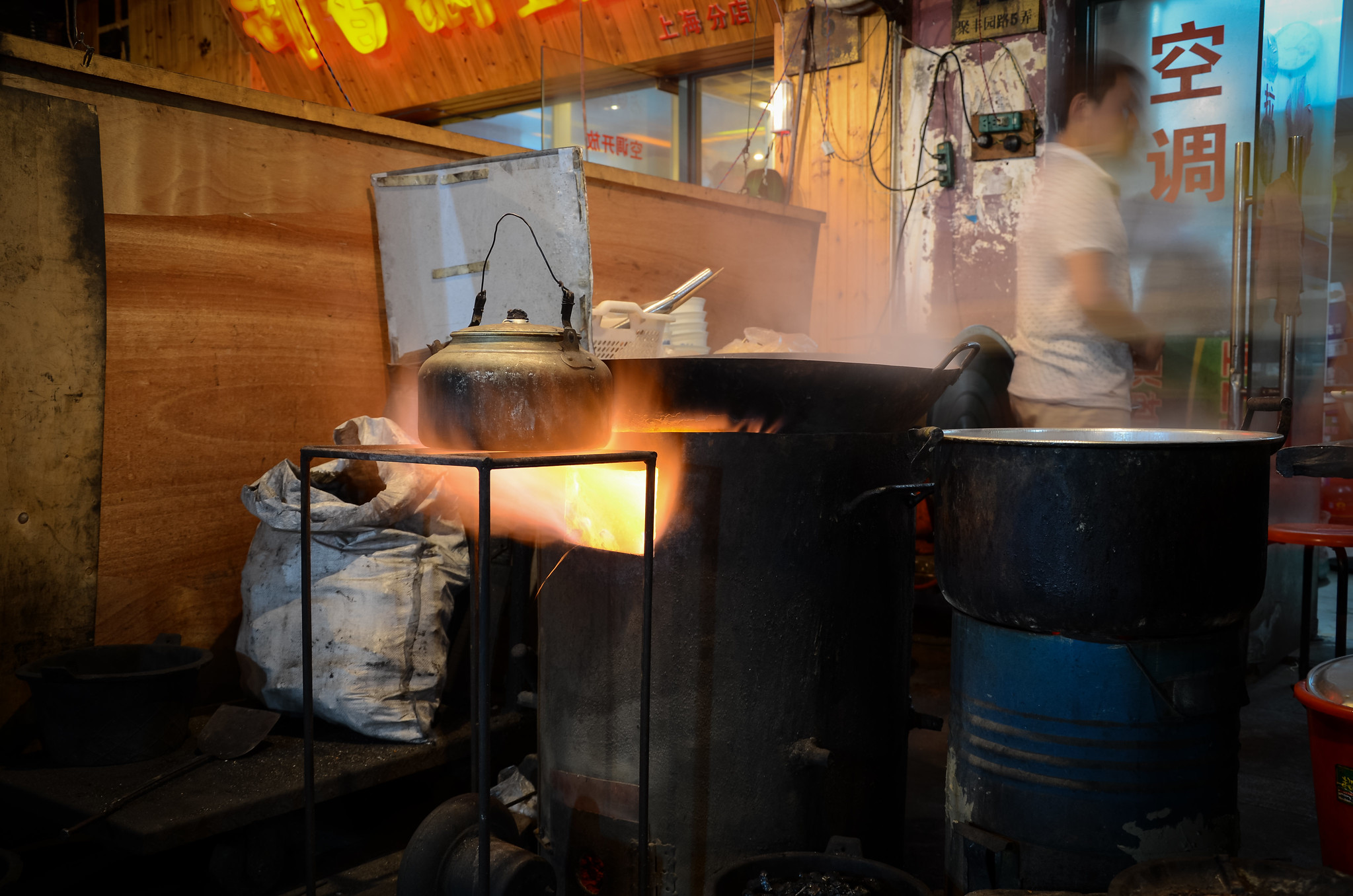
At this stall, a family—a grandmother, son, daughter (or daughter-in-law), and grandchild—were very accommodating, and they really liked the shot after I showed it to them. The huge wok and open flame caught my eye, but I’m really pleased with the little details here—the shovel in the bottom left, the dividing paneling, the electrical sockets and peeling paint. A perfect environment for street food!
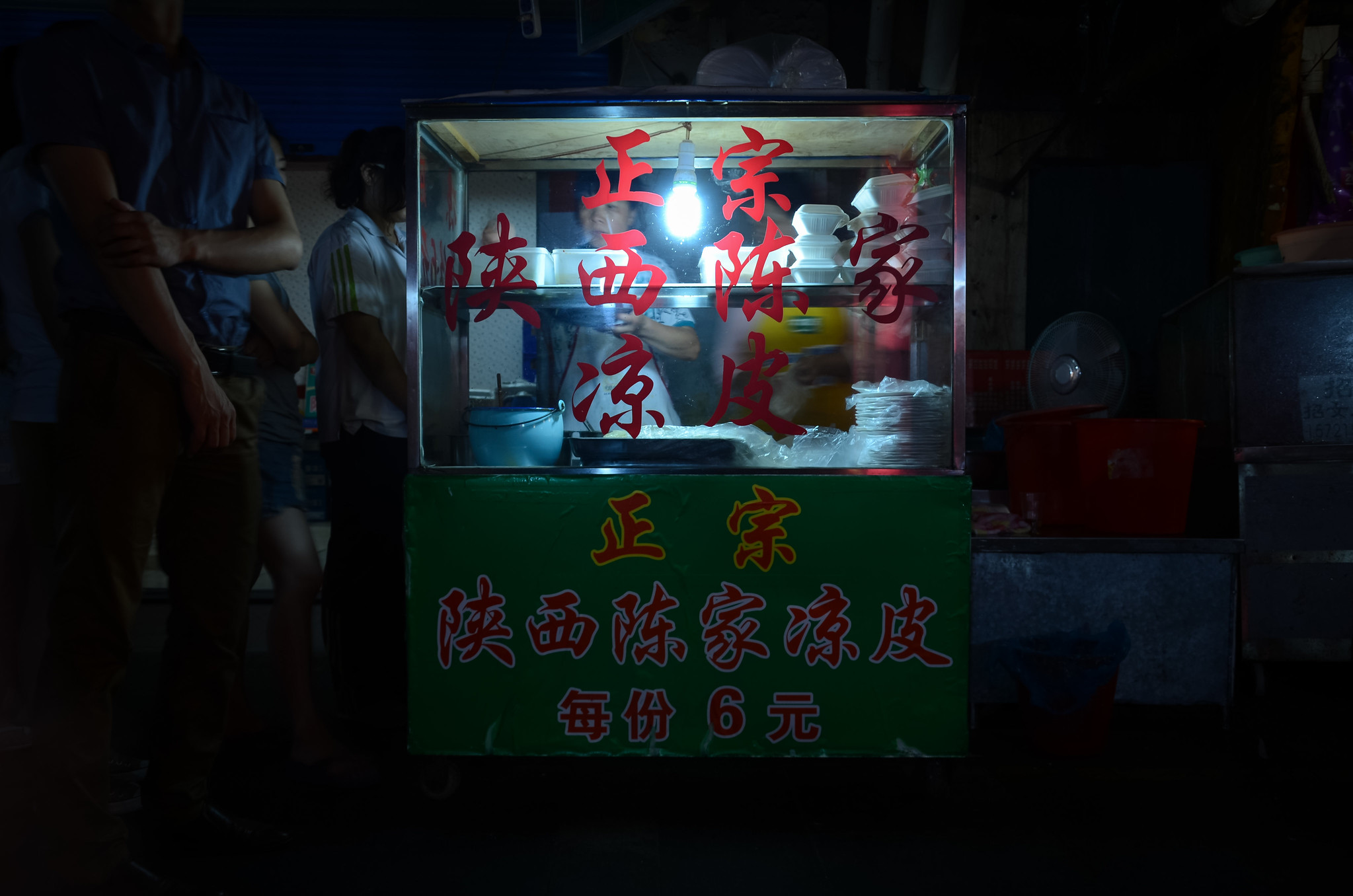
This image is intentionally dark; to the left of frame, a line stretched easily twenty people deep. The single bulb illuminating the workspace caught my eye.


Finally, a couple of the few food close-ups I shot, before and after.

8.20.2013

Shanghai Graffiti

Shanghai Graffiti

I have a few more posts from my summer teaching in Shanghai on the horizon, including today’s on graffiti and stencil art.

I spent much of my time on the Baoshan campus of Shanghai University; I learned quickly, thanks to some impressive heat and humidity, that there were areas of campus that remain shaded throughout the day. For example, many of the main instructional buildings had bicycle garages at the ground floor, like this one:

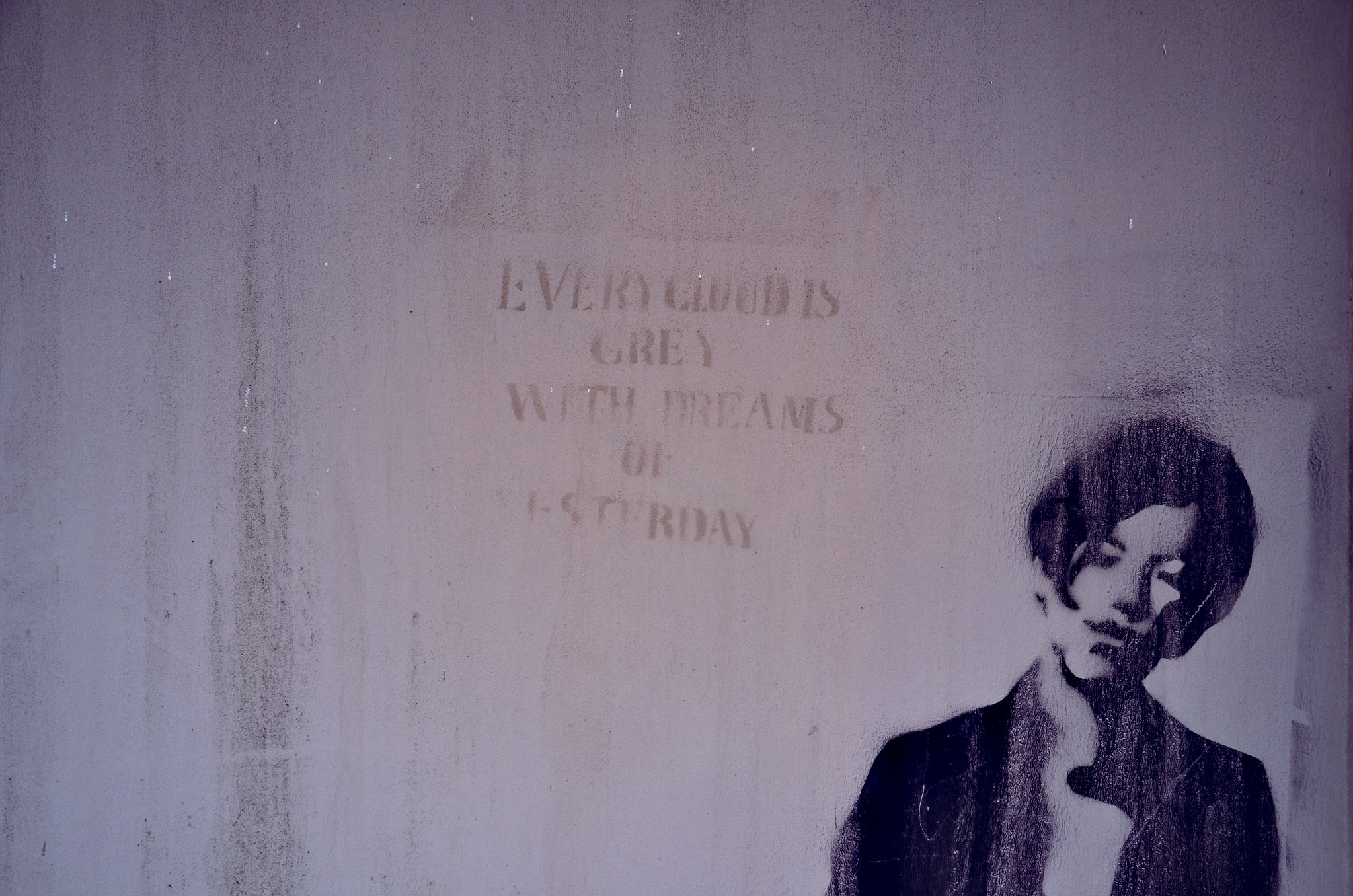
The walk to my classroom was about a mile or so, and I covered most of it by moving through the bicycle garages of a row of instructional buildings. And since I spent a fair amount of time there, I noticed some interesting stencil graffiti, which I couldn’t help but photograph.

Overall, however, there were few examples of graffiti that I saw during my two weeks in Shanghai. It's a big city, though, and I saw only a fraction of it!

7.31.2013

Everyday Details

Everyday Details

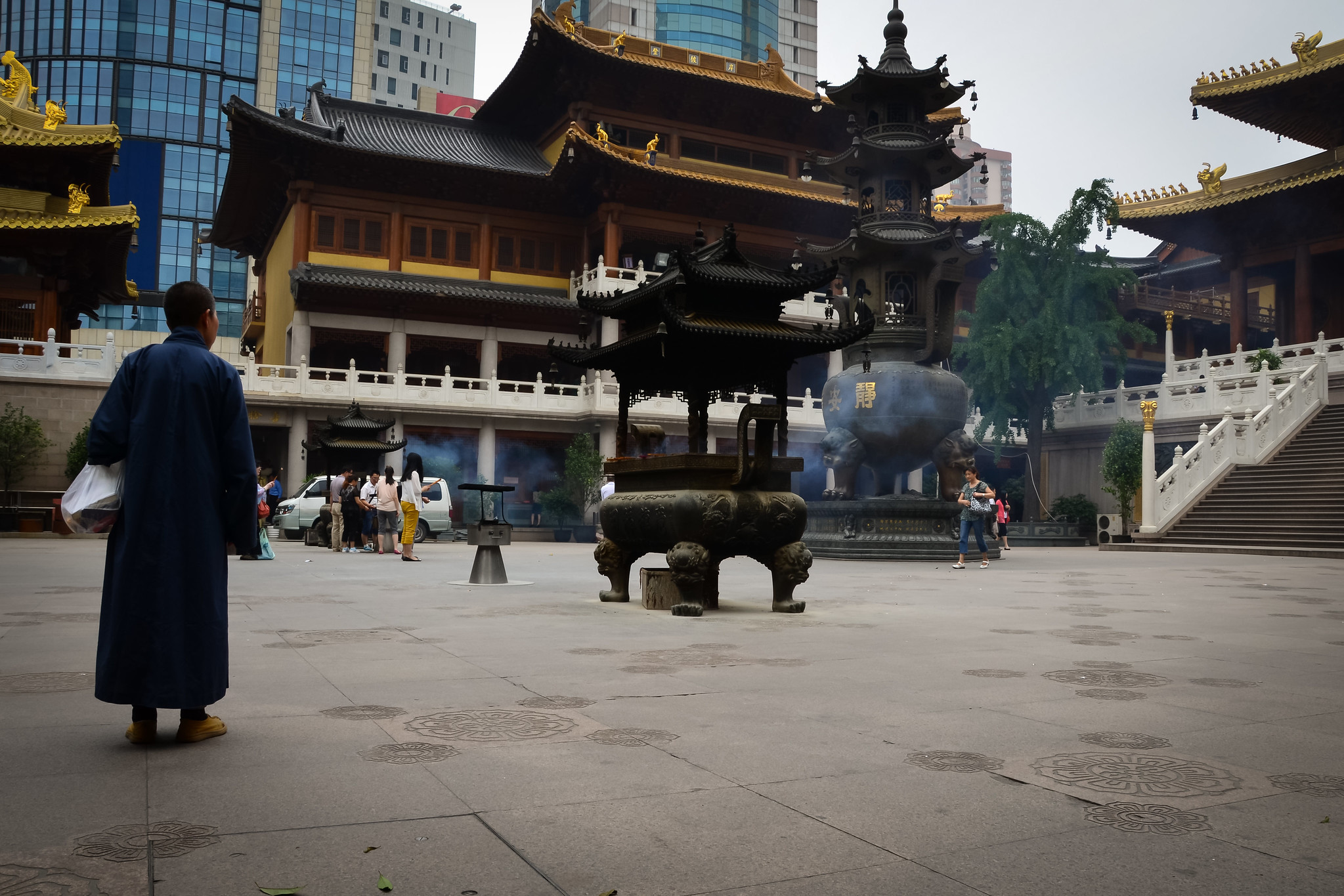
While I was in Shanghai, I spent half a day in and around Jing’an Temple, a key site of contemporary Han Buddhism in China.

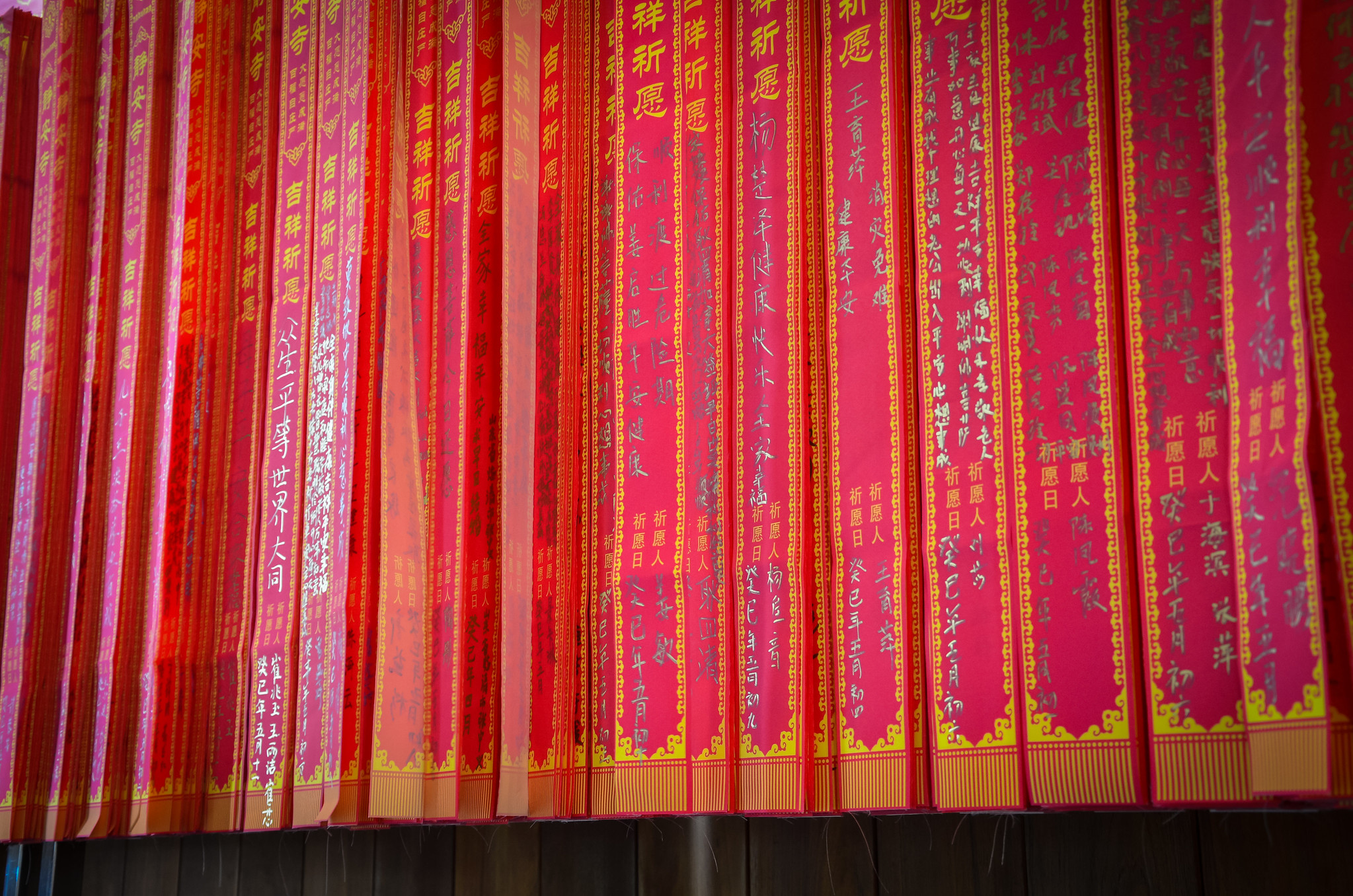
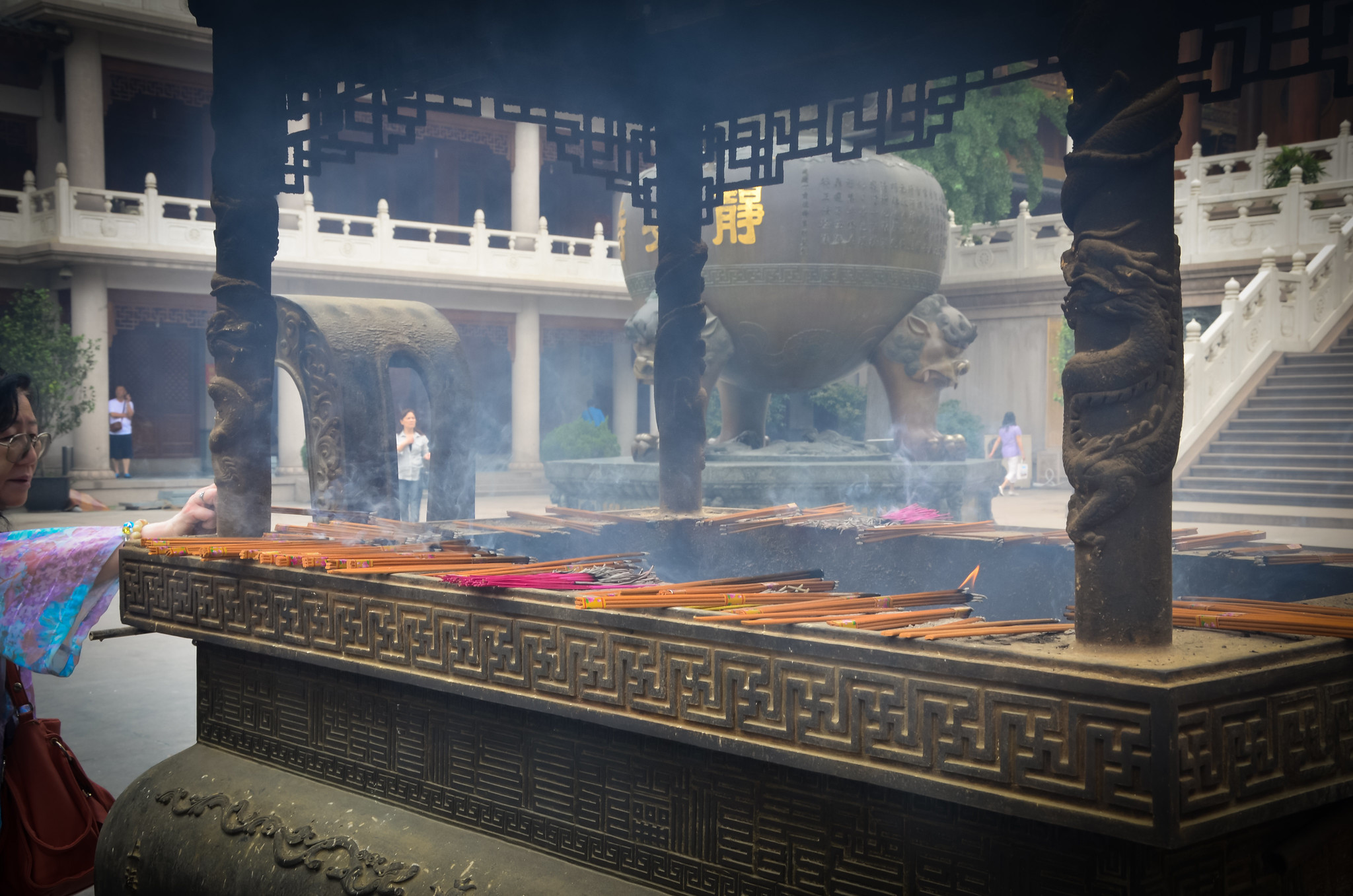
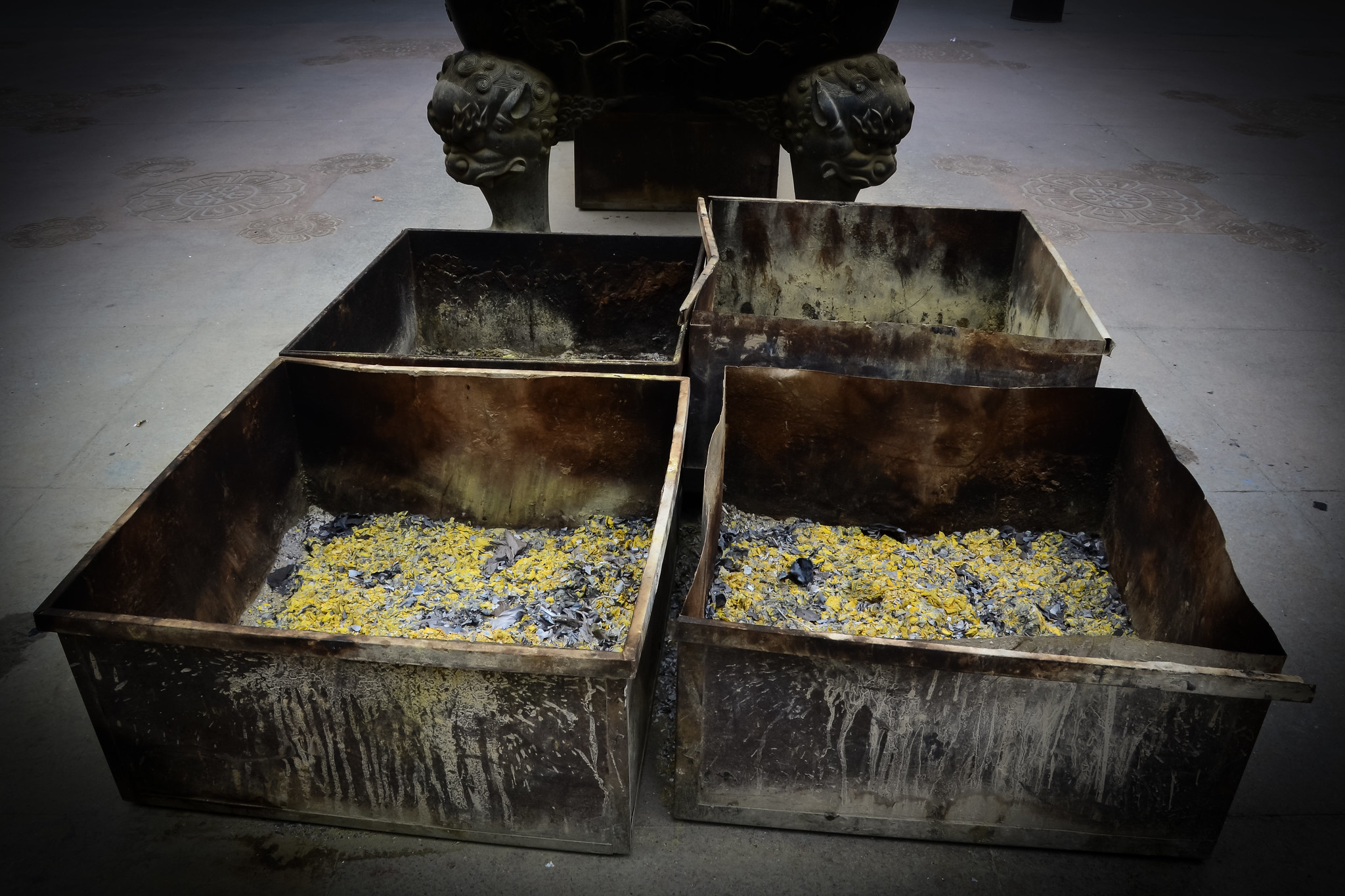
This is a fascinating place for many reasons, but what I found most interesting were the everyday details—from the feel of architectural materials and their accompanying visual flourishes to the smell of incense and the sounds of visitors lobbing yuan coins into the central metal tower.

If you regularly read this blog, then you’re possibly aware of my ongoing multisensory ethnography of Eucharistic Adoration practices. Perhaps out of researcherly habit, I found myself zeroing in on Buddhist analogues while I was at Jing’an Temple, taking many photos of the seemingly small, often fleeting and sensory everyday details that help make a sacred space sacred.

What we often overlook, though, are the details that make everyday spaces what they are. We can extrapolate from these exemplary spaces, I think, and look at quotidian spaces in new ways.

10.19.2009

:: repurposed ::

:: repurposed ::


:: repurposed :: is a blog exploring rhetorics, places, and publics from a group of researchers at Ball State University. It goes live tomorrow, though a preview version with a few posts are currently available. There are still some design issues to sort out, and some final preparations related to content.

While many of the contributions to the site will be from students in my senior seminar, the driving idea and impetus is the production of a sustainable and meaningful space for the ongoing discussion of the complex relationships between language, placemaking, and publics. Over the next few weeks, we expect to consistently have between 15 and 20 posts each week, and we are soliciting occasional guest posts from a variety of disciplinary and professional domains. We see this as a post-disciplinary endeavor, one which is ultimately focused on better understanding how we make meaning in and through our public places.

To that end, the site will consider wayfinding activities, architecture, mapping, ubiquitous computing and context-aware environments, the social production of place and the social construction of place, alleys and interstices, landmarks, edges, paths, and nodes, public discourse, walking, bikes, skateboards, autos, and the many ways that human beings repurpose their environments--discursively, materially, affectively--in order to make meaning.

Please consider adding :: repurposed :: to your feed reader or bookmarks. If you're interested in contributing--once or occasionally--on any aspect of rhetorics, places, and/or publics, please don't hesitate to contact me.

6.08.2009

Bicycle Wayfinding in the Early 21st Century


I've long been fascinated with with the interstitial spaces of cities. Back streets, alleys, shortcuts, and other little-used or liminal spaces are profoundly interesting to me. One of the reasons has to do with the arrangement of such spaces themselves. Another reason is the potential they offer for alternate wayfinding, spaces separate from the traditional grid that nonetheless allow movement through a city in ways that are often far more effective and interesting than sanctioned norms of travel.

I can pinpoint my own fascination with such spaces: I grew up in a suburban home in a suburban environment where alleys and other interstitial spaces were systematically engineered out of the landscape through rigid norms of wayfinding predicated upon the ubiquity of the automobile.

So my fascination begins in lack.

Yet while my suburban childhood was scrubbed clean of the concrete canyons, alleys, and spatial loopholes of the big city less than 30 miles away, my family's home abutted "the creek" and an industrial park across the water, and both provided some of the liminal mystery missing from suburbia.


"The creek" was in reality a series of arroyos and wastewater drainage culverts connected throughout our subdivision at right angles that paralleled our suburban streets. By age 10 or 11, my friends and I had determined who lived on "the creek" and how we might travel to each other's homes (and other places throughout the city) without ever setting foot on pavement. The flattened rock roads that bordered either side of "the creek" became our preferred mode of wayfinding--by foot or by bike--and "the creek" became our haven, a liminal and semi-private thoroughfare ignored and concsiously unseen by the good citizens of suburban car culture.

Bicycle Wayfinding

A couple weeks ago TechCrunch featured a service called Ride the City, an organization whose mission is to help cyclists navigate New York City efficiently and safely. For navigation from point A to point B, the service allows you to choose the "Direct route," the "Safer route," or the "Safe route." This is an interesting appropriation of the The OpenStreetMap, and one that is increasingly viable given the ubiquity of GPS-enabled mobile phones. Moreover, any application which serves to increase the safety of bicyclists in major urban areas is both welcome and necessary.

Today, Wyrdy published a compelling piece called The New iPhone is a Pointing Device for the Real World: The Ground Will Speak. Among the more interesting points is the discussion of augmented reality and the ability to tag and interact with real-world spaces. Both Ride The City and the News-Wyrdy piece have me thinking about the ability to increase interaction with the city, to foreground the previously unseen, and to navigate urban environments via bicycle in ways that are subversive--ways which allow non-car citizens to reclaim and repurpose the city in part by networking automotive non-places.

Yet even as I am encouraged and energized by technology-enhanced bicycle wayfinding, I have reservations that stem from rhetorics of space and map-making. I am thinking in particular about Diehl et al's fantastic article "Grassroots: Supporting the Knowledge Work of Everyday Life" and the importance of understanding and uncovering the rhetorical infrastructures of mapping and wayfinding in and through their technological manifestations.

In short, I see the tremendous potential of GPS-enabled services for increasing the ability and effectiveness of bicycle wayfinding, but I also see tremendous potential for the limiting effects of a normalized consensus about what constitutes "appropriate" or "safe" bicycle movement throughout the city. Much of cycling, in my opinion and experience, is about circumventing or subverting the norms of automobile-focused city planning. Tools such as Ride The City should allow and embrace user-generated contributions of liminal and interstitial wayfinding.

In our age, most motion is done with the assistance of technology. The farther we go the faster we go, the less our bodies have to move at all.

As technology, legs themselves are almost obsolete. As technology, they have buried themselves in cars, elevators, and the telescopic hallways at the gates of airports. They are the evolutionary experiments of our species. Though we keep the hardware, we have lost the application. The intensity of our desire for motion has made our bodies merely units of transport, personal storage containers, carry-ons. ~Travis Hugh Culley, The Immortal Class
Culley's 2001 paean to the culture of the Chicago bike messenger, though at times overwrought and over-romantic, remains one of my favorite books. Culley argues that "the problems of cycling in the American City are as real as the problems of driving in the American City. They are in fact the same problem, and the courier should be credited for overcoming the problems of transportation with such admirably simple tools."


Much of Culley's book is about the philosophy that attends urban wayfinding via means anithetical to modern urban planning. He contends that
The bicycle is a revolution, an assault on civilian territory, intent upon taking, from the ground up, responsibility for the shape of our cities. It is a mutiny, challenging the ever-one-way street. The bicycle is a philosophy, a way of life, and I am using it like a hammer to change the world [....] ~Travis Hugh Culley, The Immortal Class
Culley's most lucid and effective arguments center on the experience of navigating an urban landscape built specifically to exclude bicycles. Such navigation considers the liminal, the interstitial, and those spaces consciously unseen by the automobile. More importantly, since most American cities were not built with cyclists in mind, subversive bicycle wayfinding can reveal things about the city--things which are generally ignored by mapping technologies--which can enrich our understanding of urban space.
When a motorist sees a biker run a red light, cutting through four lanes of traffic going twenty to thirty miles an hour, the driver is generally going to think that the messenger is totally insane, has no regard for anyone, and doesn't even care enough about life to look before rolling out into a stampede of steel.

[...] motorists will likely never understand this because they will never address the innate advantages a bike has over a car.

The kind of perception that drivers have behind a windshield, a set of small mirrors, a thousand-pound engine, and dashboard seriously limits their view of a cyclist's experience. The speedometer, the doors, the little sticker that says that the steering wheel is equipped with an explosive airbag, the seat belt, all of these aspects to driving a car condition the driver's mobility and perception.

Cyclists work with a much more open sense of immediate space than drivers do. They have at least 330 degrees of unobstructed vision [...] and about 720 degrees of hearing. [...] I see wholes, even at the highest speeds I can reach.

[...] Most drivers don't have this kind of metaphysical connection to their cars. The car for most people is an anesthetic, a wall between themselves and the world. ~Travis Hugh Culley The Immortal Class

Ultimately, and most importantly, Culley's experience as a bike messenger gave him a perspective on city planning that I invoke here as crucial to the present and future (grassroots) engineering of our cities beyond the dominance of the automobile.
How can a government of car-numbed, suburban politicians intelligently manage a street or organize a city when they are unable to see beyond their dashboards and their own symbolic aggression? Can a governing body that is so remarkably ignorant of the dynamics of a cyclist's behavior represent a cyclist's needs? And furthermore, should a governing body that only knows how to drive through a city be chosen to manage it? ~Travis Hugh Culley The Immortal Class
These questions bring us back to the technological tools increasingly available to those who experience the city on an alternate or cross-hatched grid, who navigate the interstices unseen by the comparatively massive population of steel-ensconced citizenry.

Lines and signs marked the street lanes explicitly for automobiles. The pedestrians were sanctioned to cross inside carefully drawn white lines. I was somewhere in between, unsure of which directions to follow. ~Travis Hugh Culley, The Immortal Class
Our tools need to be used in the interests of alternate wayfinding, of uncovering and communicating--on a larger scale--the liminal spaces conducive to navigating the city via bicycle, while simulatenously claiming a greater and safer propotion of the currently cross-hatched spaces of shared navigation.

In other words, we need strategic rhetorics of mapping, wayfinding, and user-generated local communication that makes bicycles more visible and viable in our urban environments. Leveraging some of the new tools available to us--in the spirit of the Grassroots article noted above--may help us do so.

5.19.2009

Atwood, Clock

5.12.2009

Representing Space

When I close my eyes and remember my childhood, I am running across a bumpy field in Holland, the ball at my feet. I am 12 years old, wearing the red-and-black of my club, Ajax Sportman Combinatie, and we are playing against some farmers' kids from a local village. Each of them is a head taller than us, and the Dutch are the world's tallest nation. It is a cold autumn Saturday morning. ~Simon Kuper
This post is about landscape photography, and about the manipulation and representation of public space. This post is also about football, the (mostly) fluid manipulation and representation of public space.


I've recently purchased a book of photographs called European Fields: The Landscape of Lower League Football by the famed Dutch photographer Hans van der Meer. I am running short of superlatives that will adequately describe this collection of landscapes so I'll keep it simple: it's stunning.


Van der Meer captures and weaves together so many of the things that inspire me, and thoughtfully articulates such representations--discursively and visually--in a way that is impossible to digest in one sitting. You see, these photographs are not about football, they are about spaces, places, and publics. Football, you see, is about spaces, places, and publics.

In 1988 someone in the Spaarnestad Archive in Haarlem, Holland's largest photo archive, showed me a pile of old football photographs. They were beautiful black and white prints of the Dutch national team's international games from the beginning of the twentieth century until the mid-1950's. Most of the photographs were taken from behind the goal, but some from a position up in the stands. The space in the images looked so obvious to me that I wondered why I had never seen football pictures like them before.

Taken with old large-format cameras, each photograph was pin sharp. You were allowed to see the entire setting of the match. The pitch was only the foreground. You could also distinguish the faces of hat-wearing men in long coats in the opposite stand, the flags on top of the roof and the trees beyond; sometimes even houses, or traffic in a street in the distance. I found these unintentionally photographed details touching.

In the archive you could see how radically the photography of football had changed at the end of the fifties: space disappeared from the images. In a sport which is all about the position of players on the pitch, the photographers had given up one of their most powerful weapons: the overview. ~Hans van der Meer
More importantly, photos of contemporary football elide the quotidian realities of the game: it's rarely played as spectacle, yet nearly always photographically represented as such, in the cathedrals of sport where comparatively few are granted admission. Yet variations on the sacred spectacle are played in the publics of the everyday, nearly everywhere. Van der Meer's photographs offer representations of everyday publics, "as far away as possible from the Champions League."


The precursor to Van der Meer's European Fields was Dutch Fields, a work that respected landscape architect Dirk Sijmons calls "the best collection of photographs about the Dutch landscape" he had ever seen. Van der Meer is interested in the "second world" beyond the pitch--in the juxtaposition of publics--the manipulation of space from touchline to touchline, and the orderings of space beyond both.


Many of the collection's most remarkable representations of public space are muted and difficult to spot. In Consett, England, a muddy community pitch sits opposite a skinny wooden fence, duplexes and row homes arrayed haphazardly up a hill, the sky a slate, formless gray. The action on the pitch, in the forground of the image, escalates just outside the 6-yard box, as the Blackhill Comrades mount a menacing attack. To the far right of the image, a shaggy-haired blonde boy, perhaps 12, stands on the back stoop of his family's duplex in short sleeves, taking in the action with neither glee nor contempt. It is what it is.

In Marxloh, Germany, two teams kick up dust on a pitch that resembles a baseball infield, all gravelly dirt and white chalk lines. In the distance beyond, impossibly tall smelter smoke stacks rise above the trees that ring the pitch.

In Lourmarin, France, players from Lourmarin JS and Cheval Blanc, teams with nearly identical kits, anticipate a corner kick, while a handful of spectators sit upon a stone wall that separates a car-lined street from the pitch. Across the street are tasteful, tile-roofed commercial buildings, two or three stories high, with signs that advertise a pharmacy, La Poste, and Credit Agricole.

In Salon de Provence, France, the detail is easy to miss. A keeper stands alone on a dirt pitch, framed at the left of the photograph, hands on hips, standing near the top of the 18-yard box. His shadow stretches long to the right, streets, trees, and homes in the background. Directly behind and parallel to the goal is a medium-sized chapel, its roof, bell, and cross striking against a pale blue sky. To the far right of the image, just inches from the touchline, stands a priest in full vestments, hands drawn up in a prayerful pose. Like the keeper, he takes in the action at the other end of the pitch.

These photos are rarely about football, and always about public space. Public space in each of these photographs is often about football.


In Brilliant Orange, David Winner argues that "space is the unique defining element of Dutch football," that "no one has ever imagined or structured their play as abstractly, as architecturally, in such a measured fashion as the Dutch." Winner's assessment of the ways in which the Dutch fluidly manipulated the space of the pitch is astute and inspiring. And yet I wonder, how are young players in the dusty streets of Angola being shaped by the space that surrounds them, as they play right now? How will the kids playing in an alley of Marseille shape the limited space of their makeshift pitch? How does public space structure football, and football structure space? And how will we represent such interaction where it occurs?

[The above photos may be found in there original contexts here.]

4.19.2009

Usurping Usability

Rensselaer Polytechnic Institute, Troy NY