Showing posts with label photos. Show all posts

11.19.2015

What Camera Should I Buy?

What Camera Should I Buy?

tl;dr — This is a long post, so here’s the gist: Cameras don’t really matter, because they all work basically the same way. What, how, and why you make photographs are more meaningful questions to ask when you’re getting serious about photography.

Grab something, anything—even your smartphone—and make photographs deliberately. A deliberative, contemplative, and reflective approach toward the images you make and share is much more important than the camera. This applies to visual researchers, but I’m pretty sure it applies to most image-making scenarios.


Every so often I get an email or message from someone who writes to ask: “What camera should I buy?”

This is a tricky question to answer, and I usually respond with questions of my own: What are you going to photograph? What do you want your camera to do for you? How much can you reasonably spend? Do you care about having multiple lenses? Do you care about how your camera looks, as an object, in addition to how it sees?

I’ve answered the question of “what camera to buy” enough times that it occurred to me to write a post about it. It’s weird that I even get this question, though; I’m nowhere near a professional photographer, nor do I keep up with gear. If you say “I’m thinking about buying X Camera,” it’s quite likely I’ve zero experience with that camera.

I use cameras to make photographs in the processes of conducting research, and in the processes of living everyday life. That said, I have learned a lot about what I want from photography (and cameras are pretty important to photography), so if reading about what I’ve learned is useful to others, then please to enjoy…

Leveling Up as a Photographer

The folks at DigitalRev recently posted a video that pretty well mirrors my own journey as an amateur photographer. It’s very tongue-in-cheek, and well worth five minutes of your time:

Thankfully, I skipped Level 1; I’ve experienced several of the remaining levels to varying extents, though. For example, I did completely geek out on gear (Level 2) before I became a student of photography (Level 3) and embraced the philosophy that a camera should go with one everywhere (Level 4). I dabbled in the hobbyist phase (Level 5), but became bored by message board arguments and the gear pedants and zealots that thrive there as an invasive species (see Level 1).

I’m nowhere near an “Online Legend,” Level 6, though I have had a couple of photos make Flickr’s “Explore” page, including this one, which picked up 300 faves and over 20,000 views in a 24 hour period. That was a trip, since I’m lucky to get 1,000 views and 20 faves on any given Flickr photo. Flickr and Instagram mystify me. Images that I think are well-composed and interesting, such as this one, rarely receive much love. DigitalRev’s take on this is spot on, but I digress…

Obviously, I don’t earn my living as a photographer, so I kind of sidestepped Level 7; like many photographers, amateur and professional, I strive to reach Level 8, in my own way. But it takes a while to figure out what you want from photography. It has taken me the better part of the last 3 or 4 years, shooting and editing almost daily, to kind of be happy with what I’m doing and to get what I want from cameras—to get them to see what I see with my eyes and brain. Your mileage will vary, of course.

So, What Is a Camera, Anyway?

It’s a box with a hole in it. Seriously, that’s it. Every camera, ever, is a box with a hole in it. Despite the dizzying array of dials, buttons, and menu options on contemporary digital cameras, the damn things are just boxes with holes in them. I wish someone explained this to me many years ago.

“Wait a second,” you’re thinking. “Surely it’s more complicated than that.” Well, yes, I need to add one other element: material that’s sensitive to light. The predominant light-sensitive material used in photography for 100 or so years was film. Now, our predominant light-sensitive material is a digital sensor.

So, a camera = box (that shuts out light) + hole + light-sensitive material (film or digital sensor). Really and truly, that’s it. Have you ever heard of a pinhole camera? Box, itty-bitty hole, film.

“Wait a second,” you’re thinking once again. “Surely it’s more complicated than this.” It is more complicated, but not much. The things we add to cameras are simply variations on the theme of box, hole, light-sensitive material.

For example, a lens helps us focus the light that comes through the hole and hits the film or sensor. Blades inside the lens help us control the size of the hole, known as aperture. Controlling the size of the hole lets us adjust to different light sources and intensities, and lets us control what’s in focus and what’s out of focus (known as “depth of field”). A shutter gives us control over how long we allow light to shoot through the hole and reach the light-sensitive material. And something called ISO allows us to choose the sensitivity of the light-sensitive material.

Are these things—lens, aperture, shutter, ISO—very complicated? Not really. The first three are all simply improvements upon characteristics of the hole; ISO is an improvement upon the material where light is written. [1]

In sum, the composition of any given photograph involves light passing through a hole into a light-proof box (that is, the light can’t spill out the sides or back) onto film or a digital sensor. You can make a camera with a roll of film and an Altoids can.

If you already knew all this, then I apologize for making you read the last few paragraphs. I write this because I didn’t know this stuff with this kind of clarity until a couple years ago, even though I’d been making photographs since the early 1980s. In fact, it wasn’t until I started seriously shooting film again, in the spring of 2014, that the simplicity of the technical aspects of photography clicked into place for me.

Aperture, Shutter Speed, ISO

This is the stuff to learn, no matter what camera you shoot. What’s the definition of a “user friendly” camera for most people? One that doesn’t make you think about these three things.

But you want to think about these things, because they’re the only things that matter when it comes to the technical side of photography. And once you learn them, they work on any camera. Any camera. Because all cameras work the same way, remember?

Aperture. The aperture is the size of the hole, period. Bigger hole, lower f-stop number; smaller hole, higher f-stop number. F2 means the hole is wide open, while F22 means the hole is really small. Big hole = small focus area. Small hole = everything in focus.

Shutter Speed. Fast shutter speeds freeze movement. Slow shutter speeds blur movement. Want to take a picture of a waterfall? You don’t want to shoot it on automatic mode, with a 1/2000sec shutter speed. Why? Because you’ll get a crappy picture of water frozen in time. Instead, put your camera on the ground or some other stable surface, switch over to “shutter priority mode” and shoot it at 1/2sec or 1 second. Your rocks and trees will be perfectly sharp, but the water will be a smooth, pleasing blur.

ISO. It used to be that you could only control ISO within a very limited range of film sensitivity—between about 50 and 1600 ISO. You selected your ISO when you bought your film, and once that film was in your camera, you were stuck with it. With today’s digital sensors, we can adjust the sensitivity to light (ISO) on the fly, shooting one picture in broad daylight at 100 ISO and the next indoors, in very low light, at 3200 ISO. Because digital cameras are so good with this, you basically almost never need to worry about ISO. It helps to know how it affects your images, though.

Here’s a great little infographic with everything you need to know about how aperture, shutter speed, and ISO affect your shots. This is the stuff to learn.

Shooting Modes

Pretty much any digital camera you can buy nowadays comes with these basic shooting modes:

  • Automatic: camera controls aperture, shutter speed, and ISO
  • Aperture Priority: you control the aperture (e.g., “I want my background to be blurry, so I’m shooting this at f2”), the camera controls shutter speed and ISO
  • Shutter Priority: you control the shutter speed (e.g., “I want the water in this waterfall to be a silky-smooth blur so I’m shooting this with a 1 second exposure”), the camera controls aperture and ISO
  • Program Mode: basically a fully automatic mode, but with a little more control (e.g., “I don’t want the flash to fire, but I want the camera to figure out everything else”)
  • Manual Mode: fully manual—you choose aperture, shutter speed, and ISO

Most professionals and hobbyists shoot in manual mode, right? Wrong. In my experience, most shoot in aperture or shutter priority mode.

When I’m shooting digital, I’m usually in aperture priority mode. I also have my camera in “Auto ISO” mode. This means that I tell the camera: “shoot between 200 and 3200 ISO, depending on the available light.” (I don’t want it shooting over 3200, because the pictures become grainy in my particular camera—yours may shoot fine up to 6400 or even 12800 ISO).

On the technical side, the only thing I’m thinking about for most everyday shots is the aperture and depth of field—what do I want to get in focus in a given shot? I select the aperture and let the camera figure out shutter speed and ISO. Easy. If I’m shooting something where I either want to freeze movement or show movement, then I’m probably switching over to shutter priority mode.

Put simply, aperture priority and shutter priority modes cover roughly 90% of my digital photography.

If I’m shooting with a flash, or if I’m shooting film, that’s when I’m in manual mode. My film cameras are all fully mechanical—there are no batteries, no electronic components, and so everything is set manually for each exposure.

So, What Camera?

The first thing to consider in any digital camera is whether it has all of the shooting modes I detailed in the previous section. If it meets this very, very basic test, you’re good to go.

The next thing to consider is: fixed lens, or lens system?

I’m not going to delve very far into this at all. But here are some basics:

  • “Kit” lenses—those that come bundled with cameras such as the Nikon D3300 in an Amazon deal—are serviceable, but not great.
  • Zoom lenses, unless very very expensive, tend to be of lower quality than prime lenses.
  • Prime lenses have a fixed focal length—e.g., 50mm.
  • Prime lenses typically have a greater range of aperture options, which gives you more control over the creative and aesthetic aspects of your images.
  • Prime lenses may be extremely expensive, but they are also sometimes super affordable—Canon and Nikon both make stellar 50mm and 35mm lenses for around $200.

That should suffice. Back to the question: fixed lens or lens system?

A fixed lens camera has one lens that cannot be swapped out for another. If you buy such a camera, you’re stuck with that lens. For many digital cameras, that fixed lens is a zoom.

Lens system cameras allow you to purchase the camera body and lenses separately, giving you lots of flexibility and room for growth over time.

I own several fixed lens cameras (one digital and four film), and two lens system cameras (one digital and one film). They’re all great, and all used to make different kinds of images. My fixed lens cameras are much better looking, as objects, than my lens system cameras, which are big, bulky, and kind of awkward.

Right now, I’d say 95% of my photography happens with a fixed lens camera; I pull out the lens system camera for special situations (photographing written artifacts, shooting portraits, etc.). Don’t make anything of this—it’s a personal preference based on the kinds of things I like to shoot and how I like to shoot right now. It will likely change, so this not an evaluation or endorsement of either approach.

What camera should you buy?

At a minimum, one that has the shooting modes above, and one that will serve you in what you want from photographs now and in the near future (2–4 years or so). If an inexpensive digital camera with a good sensor, full shooting modes, and a competent zoom (or prime) lens will serve you well, go for it. If you want to have the option to add lenses and do specialized kinds of shots, go with a lens system camera.

The stuff that follows is more important, though…

What do you want from your photography?

What do you really want to shoot? Landscapes? Slices of everyday life? Your kids? Archival materials? All of the above?

How you answer these questions will in large measure dictate the kind of camera you buy. But really, no one cares about your camera.

Over the past couple of years, I’ve become most interested in street photography. This is not the art of making shots of streets, but of simply capturing everyday life, unposed, unscripted, as it happens. It’s really hard to do well for a variety of reasons, but my best street photos have emotion and heart, and they make me really happy when they turn out well.

I could shoot my street photos with my digital lens system camera, but it would be… not exactly joyless, but less joyful. Instead I use a small, fixed lens rangefinder camera, either film or digital. I recently finished a research project using only one of these cameras, and it was very satisfying, both while shooting and during processing. The camera fit the project so well.

The thing is, I didn’t know what I wanted from photography until I’d spent a few months shooting every day.

My advice then, is simply this: Grab something, anything—even your smartphone—and make photographs deliberately. A deliberative, contemplative, and reflective approach toward the images you make and share is much more important than the camera. This applies to visual researchers, but I’m pretty sure it applies to most image-making scenarios.


  1. BTW, improvements to the box are responsible for most of the complexity we feel are part and parcel of digital cameras. But the fact that a very complex computer now sits inside the box doesn’t really change anything about how cameras work.  ↩
10.18.2014

Picturing Writing with Visual Research Methods

Picturing Writing with Visual Research Methods

In Academic Writing as a Social Practice, Linda Brodkey (1987) argued that composition studies needed a new cultural conception of composing, one that reimagined the tired trope of the alienated and anguished writer who writes alone. In a chapter titled “Picturing Writing,” Brodkey relies heavily on visual metaphors; she passionately argued that we need new pictures of writers and composing practices in their rich, socially situated complexity. She asked readers to re-see writing, to consider alternative viewpoints, and in the process, to break away from popular perceptions of composing, particularly because such perceptions obviate new, different, or even challenging perspectives about writing (58).

More recently, Jody Shipka (2011) draws on Brodkey to suggest that one charge of contemporary composition research is to foreground and make more visible the circulatory processes of composing and textual distribution (38). In response to these and similar exigencies, I compose with photography as one way in which to see writing anew—a method for re-seeing the complexity of composing processes by literally and systematically picturing writers and writing.

As a qualitative researcher focused on the activities, objects, and environments of composing, I conduct ethnographies and case studies of writers in everyday life—from academe and industry to religious practice and social gaming. In these studies, I use traditional fieldwork methods such as semi-structured interviews, participant observation, and artifact collection and analysis. In my early fieldwork, I often used photography and videography as well, mainly as means of augmenting observational fieldnotes and capturing informal talk, gestures, and spatial and material arrangements.

A few years ago, however, I realized that my use of visual fieldwork methods, while beneficial, was also somewhat facile in its execution. I learned that over the last four decades, social scientists have explored the nuances of visual methods in studies of social life (see, for example, Pink, 2007; Spencer, 2011; and Pinney, 2011), of which writing is, of course, an inescapable mediator. The subfields of visual anthropology and visual sociology have enriched my understanding and use of visual methods in fieldwork. These approaches have developed in parallel to our own field’s explorations of visual rhetorics, resulting in complementary empirical perspectives on visuality and visibility.

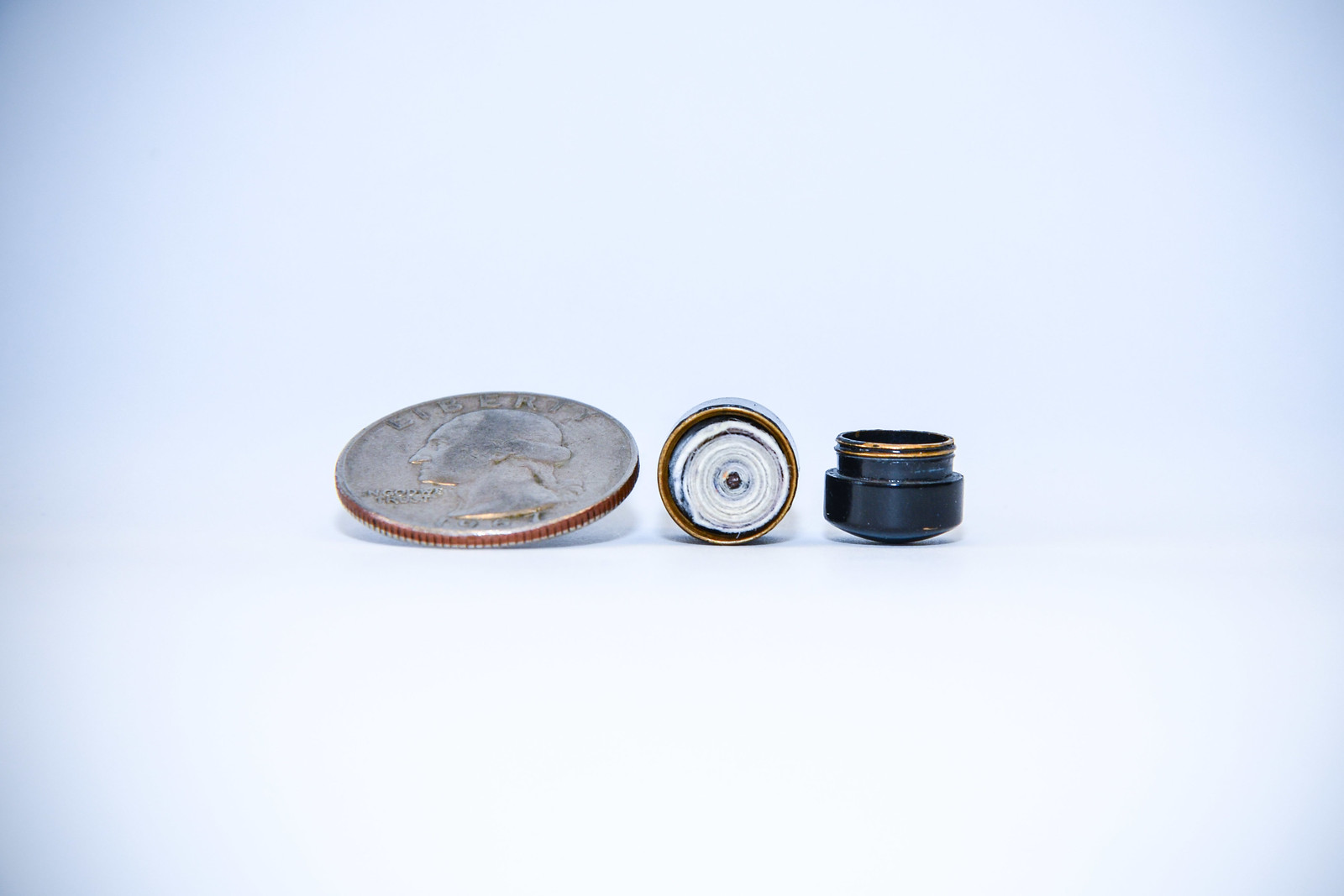
Writing in the world: a tiny geocache container and scroll for logging visits.

More recently, therefore, I have adapted approaches from visual anthropology and visual sociology to the study of writers and their composing practices and environments. Doing so has resulted in many trials and errors, but the struggle has been rewarding: I have learned to use visual methods to explore, analyze, and present the rich materiality of everyday composing practices, and in the process, to formulate new pictures of writers and writing that may be generative for participants and composition researchers alike. More important, by using visual methods in field studies I have been able to create new forms of material engagement with participants about the role of composing in their learning, work, and play.

While critics such as Susan Sontag (1977) have suggested that photography results in the distancing of photographic subjects from photographers, I have found opposite to be true: Visual methods of fieldwork result in qualitatively different forms of intersubjective understanding between researchers and participants. Composing with photography throughout fieldwork can help researchers of writing move beyond mere tautological illustration; by using visual methods, researchers may document and engage simultaneously.

More important, participants may see their own composing environments, tools, and practices in new ways, from different perspectives. A technique known as photo-elicitation uses fieldwork photographs as pivots for better understanding participant practice. For example, by photographically demonstrating a writer’s well-maintained mise en place, the researcher may help make the familiar strange for a participant, and through discussion, develop new insights about their composing practices.

In a similar way, visual methods may result in presentations of experience that are more hyaline and evocative than traditional forms of reporting. Qualitative data is notoriously dense, and for readers, the mass of fieldwork supporting ethnographies and case studies is often opaque. In addition, traditional methods of collection and representation are necessarily sequential; observational fieldnotes, for example, may miss crucial details of actual practice—movements, tools, arrangements, or cross-talk that may meaningfully mediate composing.

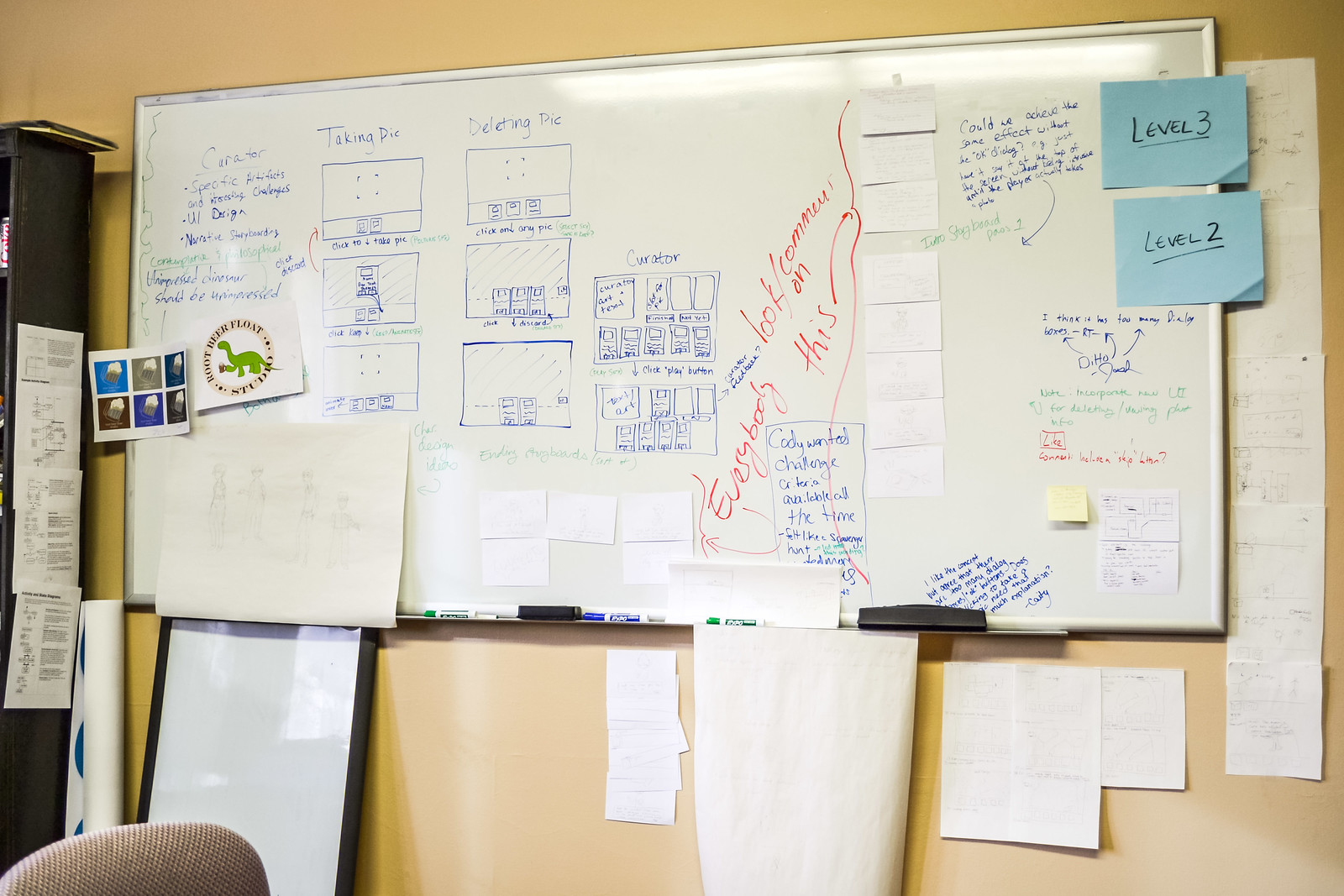
A software studio’s whiteboard is a collaborative space for composing and ideation.

Photographs offer simultaneous renderings of practice, what Flusser (2002) terms surfaces rather than lines. A traditional ethnographer detailing the complex, collaborative work pictured above must transform the simultaneously visible surface of a software studio’s whiteboard into a linear representation of activity. A visual ethnographer, however, can present that visible surface in its full complexity; when coupled with an analytic narrative that details punctuated development, a more hyaline rendering of complex composing practices emerges.

Qualitative research is characteristically ideographic; indeed, visual methods foreground the situated materiality of composing practices. This is a key strength of visual methods as I practice them in studies of writers and writing: the ability to document and collaboratively explore particular systemic contexts and the ways in which artifact assemblages participate in composing processes.

However, in developing new pictures of writers and writing, visual methods have the potential to be nomothetic in the aggregate. Because visual methods may be more hyaline—presenting richer data than traditional methods alone—they carry the potential for fruitful cross-case comparisons of composing practices. Imagine, for a moment, systematically composed and collected photographs of 20,000 first year writers’ typical composing environments and the resulting wealth of both particular (ideographic) and tendential (nomothetic) pictures of writing that might emerge from careful analysis.

Visual methods in empirical studies of writing carry the potential to further develop and realize Brodkey’s argument for re-seeing our object of study, and more important, the people who write. Barthes (1981) argued that “the camera can be an instrument of deep meaning, connecting the scene to the viewer and the viewer to existence” (131). With visual methods, writing researchers can reframe cultural conceptions of where, how, why, and with whom people write in their everyday lives.

7.24.2013

Shanghai Selfies

Shanghai Selfies

Folks in cultural studies and related fields have been banging this drum for years: we are immersed in images. We have been, sure, but awareness of ambient photography has recently gone mainstream in a big way.

I’m actually glad that I’m not studying a phenomenon like selfies right now; I’m mildly surprised by the amount of work that's already been done.

I’m a reluctant photographic subject. In point of fact, I despise pictures of myself. But sometimes they’re necessary, sometimes being in a photo is polite and tactful, and sometimes they can simply mark a happening or event.

I spent two weeks in Shanghai last month, teaching a short professional communication course at Shanghai University. I’ll have more to say about this experience in subsequent posts; for now, I’ll just say this: I loved Shanghai, I loved my students, and I can’t wait to go back.

On a few occasions during my time in Shanghai I felt compelled to photographically document my experience, mainly for my family, by using this tried and true equation: human + location = experiential documentation.

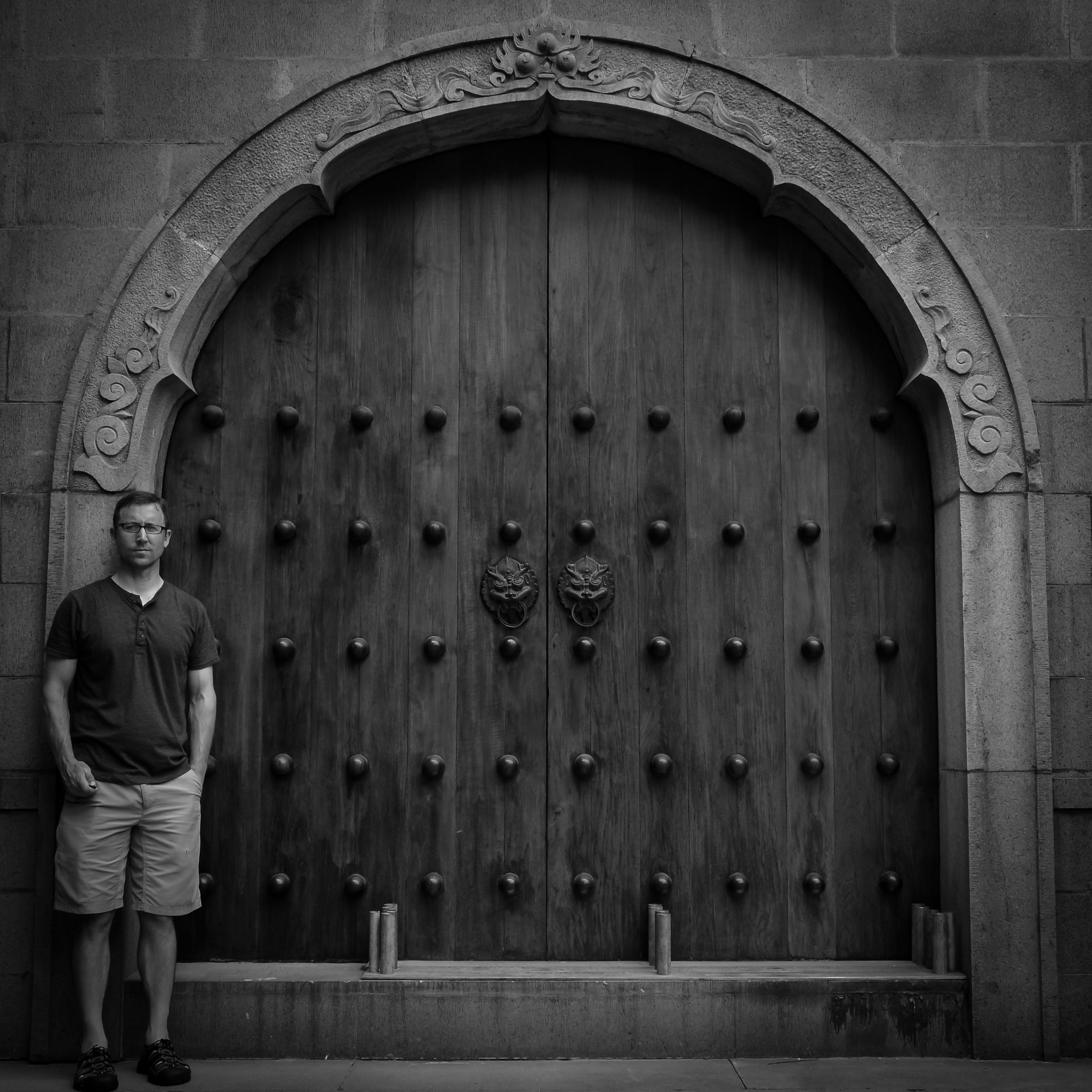
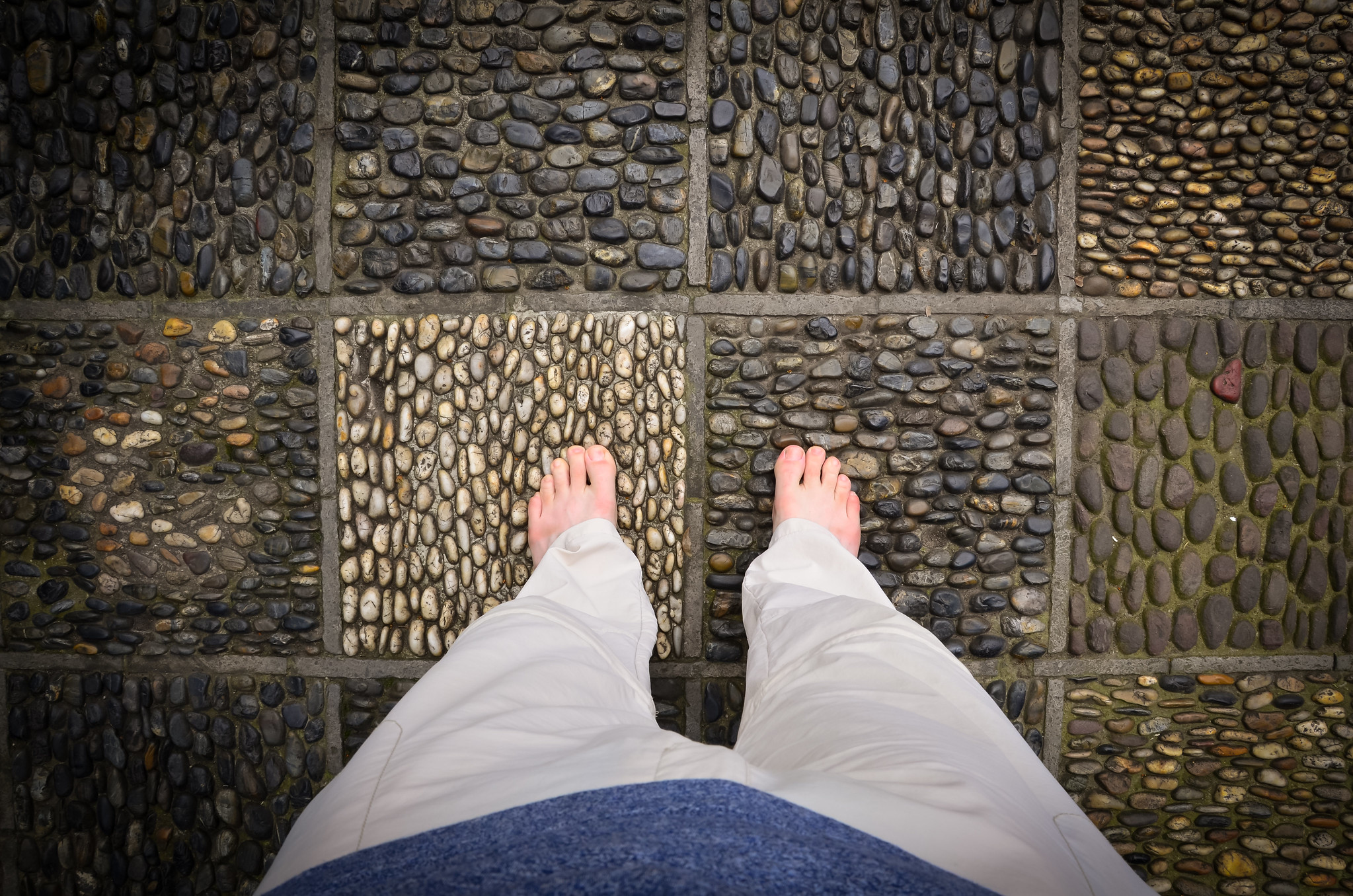
I realize that these aren’t selfies, per se, but they’re as close as I’m likely to get. [1]


  1. Photo 1: a door at Jing’An Temple; Photo 2: a little tea garden and spicy peanuts (I was the only laowai there); Photo 3: Yuyuan Garden footpaths, sensibly designed to soothe and massage bare feet.  ↩

7.14.2013

Found Photo Fodder

Found Photo Fodder

I haven’t commented much on the death of Google Reader, and while this post is marginally about RSS (and, really, about tagging within RSS), I don’t really have much to say about Reader that adds anything meaningful to all of the excellent things that have already been written.

Instead, this post is about found photos, sources for those photos, and the use of such photos in professional presentations.

Over the last few years, I’ve received some minor kudos for developing conference presentations that are visually arresting and compelling. I’ve heard lots of good feedback from folks whose opinions I value about the effectiveness of my presentation style, which is heartening.

During the first couple of years that I worked on developing this ethos, I predominantly used striking images that I found on the web (hence my use of the term “found photos,” which, technically, is different from the actual definition of found photos or vernacular photography, but not unlike that definition either, but that’s for another post…). Indeed, when preparing a presentation, I would often begin with the images, mining Google Reader posts for visuals that evoked or supported ideas I was trying to convey verbally.

After giving a talk, folks would often ask: “Where do you find all those cool images?” In reply, I would usually joke that it was a “trade secret.” But really, it was just simple sifting and winnowing using RSS.

In Reader, I subscribed to several image-intensive feeds, many of which were from Tumblr. These feeds have always made my RSS experience a pleasure, for mixed in with discourse-heavy posts from fellow academics, tech blogs, and news sites were often incongruent and arresting photos. Over the years of using Reader, I probably looked at 100,000 or more photos.[1]

When I stumbled across an image that was striking for whatever reason—and I learned to develop a sense of what would make an interesting and effective slide-ready image—I would simply use Reader’s tagging function to label the post “photos.” That’s it. When it came time to prepare a talk, I’d open my list of posts tagged “photos” in Reader and simply j/k my way through, looking for visuals congruent with the scope of my presentation.

I had thousands of posts tagged “photos” in Reader,[2] which means that I had my own archive of visuals that might evoke the presentation ethos I’d developed over time.

However, over the last two years I’ve moved away from using such found photos in my presentations, preferring instead to use my own images to support my work for two main reasons. First, I’ve been developing approaches to using visual research methods in qualitative studies of writing, and consequently, many of my talks have covered this work. Second, and perhaps more importantly, I’ve been working hard on developing rhetorically engaging visuals of my own, honing a visual phronesis related my academic work alongside the verbal and written craft.

Regardless, when Reader died, so too did thousands of tags. This is but one example; I also used tags to code data in Reader, I used tags to mark items related to research reading, and I used tags for a variety of other things (one of my favorite tags was “holy shit,” reserved for a bevy of truly amazing and awe-inspiring posts).

I moved to Newsblur in mid-June, and I’ve been very happy with the service. No tags, though, and no import for the archive of tagged items from Reader users (there are some other options, I realize, but that’s not the point of this post).

And yet, I still have the desire to single out arresting images. In the old days of Reader, I would sometimes publicly share such images. Since Newsblur doesn’t support tagging but does offer some of the social sharing features that were once part of Reader, I’ve been using the “share” feature to collect interesting found images.

It’s not a workaround, but a totally different way of thinking about the images I find arresting. Since I’m sharing these publicly, I’m thinking more about why I find the images striking, whether others will find them similarly striking, and what my sharing them says about me and my visual ethos.

If you ever wanted to tap into the archive of images I used in presentations a few years ago, or if you simply would like another image-intensive feed in your own RSS reader, feel free to add my Blurblog, a feed of nothing but images that I once would have tagged “photos” in Reader.


  1. Who knows for sure? I’m basing this on the fact that a couple years ago Google released statistics for individual Reader users. When they did, I learned that I had already surpassed 300,000 total read items, the maximum count they’d render for a given user. Again, that was a couple years ago, at least. My feed list has always included a healthy amount of photoblogs, and “reading” posts from such feeds takes just a second, particularly if the image doesn’t immediately hold my attention. Could be I looked at 50,000 images, could be I looked at 300,000. Regardless, I explored (and continue to explore) a crap-ton of images as part of my everyday routine. I’ve thus honed certain visual sensibilities alongside my daily academic reading and writing.  ↩

  2. In actuality, I had more posts tagged “photos” than Reader could actually render, should I want to mine them to the earliest such tagged occurrence. Google’s API limits, even in the good old days, stopped me from seeing more than a few thousand.  ↩

11.30.2012

Contexts, Image Making, and Understanding

Contexts, Image Making, and Understanding

“Writing and picture making have, in many significant ways, replaced human memory and become the primary means by which twentieth-century Western humanity remembers.” Ruby, 1995, p. 113.

For the first time in my life, I have grown a beard. When I look in the mirror, I see myself and I see my dad in myself.

For most of my life, my dad wore a beard, shaped not unlike my own at the moment. Before he died, his beard was mostly gray, though his thick, dark head of hair remained.

Growing up, I was most often compared to my maternal grandfather—an active, outdoorsy, stubborn, stocky bull. He was bald save a ring of hair above the ears and around the back of his head. He never wore a beard, so far as I know. He was athletic, strong-willed, even a bit obnoxious at times.

On several occasions during the time between my 6th and 10th birthdays, I remember my granddaddy (that’s we called him, because my mom called him “daddy”) arriving at our suburban Bay Area home unannounced, causing uproar, laughter, shouting, and joy from my mom, my brother, and I. Shortly after the initial commotion, he would head into our kitchen, grab a spoon and a tub of Dreyer’s ice cream from the freezer, and walk out the front door. My brother and I would give chase, and he would speed off—a 60-something man running, with ice cream!—around the block, leaving my older brother and I despondent, unable to keep up.

My granddaddy wrestled with us, and I remember trying to hang on to his legs with all of my strength as he motored through the living room. He taught me how to throw a spiral. I grew up knowing I was like my granddaddy—active, outdoorsy, athletic, strong-willed, and more than a bit obnoxious.

But I didn’t look all that much like my granddaddy. There were physical resemblances—for example, my dad was 6’ 2”, but my granddad was only around 5’ 10”; I take after my granddad.


No, it wasn’t until I watched my dad die in 2008, after his last confrontation with cancer, that I realized who in my family I most resembled. It’s not even really close, actually.

This was a significant realization. I had developed a narrative that I’d long told myself: I look more like mom and granddad, and my brother looks like dad (my brother is a couple inches taller than I am). But that narrative wasn’t accurate; I’d been telling myself the wrong story. I look like my dad, more and more as I get older. And my brother looks like my mom as he gets older.

With my new beard, I look in the mirror and I see my dad staring back at me sometimes. This is not an unpleasant feeling, but it is unsettling nonetheless.

I suppose that I would know this whether I had photographs of my dad or not. But I can’t help but think that I know this in large part because of those photographs.

I certainly don’t have any writing from my dad to supplement my memory of him—at least none ready to hand. He didn’t leave me a letter or a journal, no will with special instructions. Not that he would.

I have a few vivid memories that I can recall at almost any time:

  • The day that he almost got into a fight with another man after one of my Little League baseball games—I remember the light of that day, the slant of sunbeams across a field of grass, looking up at my dad cradling a portable cooler and fold-up chairs, ready to fire on this man for a reason I didn’t know.
  • The time he picked me up from a day hike on Mt. Diablo and took me to Frosty Freeze.
  • The first time he held my son and played with him.
  • The day that he and I took BART to see Cal play football at Memorial Stadium.

But how much can I not recall? How many everyday moments are lost?


We have images. And images, in themselves, are worthy of our attention.

But photos as objects often carry incredibly significant meanings that may only be even marginally understood with the benefit of rich contextual detail—both about the moment and circumstances of image making and the reception and use of said image.

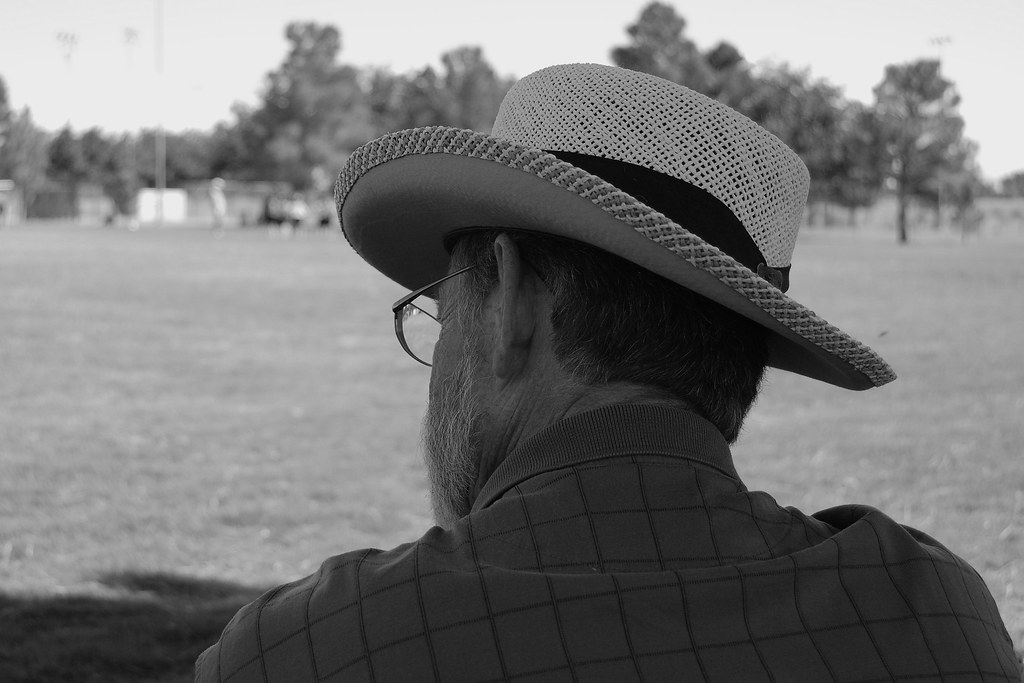
Ruby (1995) argues persuasively that “An interest in the photograph as a text complete in itself” is insufficient without “a focus on the social processes of construction and subsequent use(s)” (p. 5). Take this picture of my dad, for example:

I shot this photo as my dad watched my youngest daughter play soccer on a blue-bird day in early September, 2007. He was making his way across the country with his dog, driving from Atlanta to California and back to see family and to see the country.

He also knew he was going to die.

He didn’t tell us, of course. He didn’t say much of anything about the trip—he just wanted to get out and see us, his sister and her family, his nieces and nephews, and my brother and his family—to make this trip, to camp along the way, before he got too old.

We thought it was a bit odd, though. We worried about him. We sensed something was off.

We did the things you do with visiting family, and we had fun. I took several pictures, but when I composed the photo above, I was grasping for some significance—here’s my dad in the shade, sitting on the ground with his big red doberman laying next to him, looking out at my daughter play a game as he once looked out at me doing the same.


Almost immediately after my dad died, just four months later—after a man came to my dad’s house and pushed his dead body on a gurney out the front and into the back of a van as I held the door—I spent some time on my laptop, looking for pictures.

I was in charge of handling his cremation arrangements while my step-mother dealt with so much loss and so much legal minutia simultaneously. I’d mostly done my part by that point.

So many people had helped in small ways during the last months of my dad’s life, and there were many others who couldn’t fly to Atlanta but who wanted to be here to help—these people needed something from us, I felt. Some small measure of thanks, and some recognition of my dad’s life.

I looked at the photo above. A different context and perspective occurred to me.

Perhaps my dad was looking squarely at the now in that moment—the smell of the crab grass, the feel of pebbles and sand beneath him, the smell of the creosote chaparral on the El Paso wind, roving bunches of 4 and 5 year-olds chasing a ball—but perhaps he was looking forward, too. Maybe he was thinking about what he knew he’d miss, what his grandkids might become.

I made a little 3x5 photo card with nothing but this image of my dad and the caption “looking forward…” I ordered a few and sent them to the folks who shared our memory of him.


Is this photo meaningful without these contexts of production and use? Surely, for not everyone who received the photo card knew the backstory I’ve just provided—the contexts of production. They had other contexts that they brought to bear, however—an understanding that my dad was gone, a follow-on interpretation of the framing and perspective of the image + caption as received, and a host of their own contextual details remembered and stirred in the moments of reception and use.

Though the contextual details differ from person to person, it is the confluence of images and contexts which amplifies meaning in profound and often indescribable ways.

It’s tempting to skim across the top of these rich contexts in our investigations of images, to believe that such objects can be read without stirring up, surfacing, and carefully examining the incredibly detailed and even mundane phenomenologies of production and use.

But it’s folly to assume that such a reading can even marginally plumb the depths of those contexts; the analytic axes available to us without such cultural and historical contexts are largely superficial—lighting, composition, framing, technologies of production and distribution…

Even the term reading is insufficient, a misnomer.

Don’t get me wrong—these are important and even useful analytic axes for any interrogation of an image. Necessary starting points, to be sure.

But so woefully incomplete.

The ontological chasm between such superficial readings and more complex, nuanced, triangulated understandings of images in/and contexts is massive.

6.06.2012

Case Histories of Instagram

Case Histories of Instagram

Normally, I wait until a paper is published before releasing a free and accessible version for download. However, because of the speed of change around Instagram, the popular, mobile photo-sharing application, I decided to release this one to the public well ahead of its October, 2012 publication.

I’ve been interested in how people use Instagram for a while now. And since I primarily study professional communication in digital environments (and particularly social software), I became increasingly interested in how organizations were using Instagram.

The 2012 IEEE PCS conference theme is communicating vision; while I didn’t have an in situ Instagram project in the works, I thought that some approach to organizational uses of Instagram would be relevant to the conference theme.

Rather than trying to design and conduct a new study in the midst of the four other studies I was running at the time, I decided to work on developing a coding schema that I and other researchers might use as an entry point for exploring the organizational use of Instagram.

This paper describes that schema by systematically analyzing several months worth of Instagram photos produced by organizations in three very different sectors: NPR, a prominent news organization; Heifer International, a sustainability-conscious non-profit; and ModCloth, a vintage clothing retailer with an impressive, multi-genre social software strategy. I used a content analysis methodology to produce case histories of Instagram implementation within these three organizations. This approach is necessarily limited, of course; I hope to follow up with an in situ study soon.

The paper has been favorably reviewed, and I expect revisions to be minimal. If you’d like to cite this paper before October, I've provided the basic details; otherwise, look for the official version with page numbers soon.

I hope this schema is useful to other researchers, and I hope that this exploration of Instagram in professional communication contexts is also of interest to folks who study social software. Let me know what you think!

10.16.2009

The Sartorialist

If you've been reading this blog for any reasonable length of time, you're already no doubt aware that when it comes to certain things I can be slow on the uptake.

For example, only recently have I discovered The Sartorialist, certainly not a secret to the blogosphere. In fact, my discovery engine for such things being what it is, the find was purely serendipitous; apparently The Sartorialist is fond of shooting photos of stylish everyday cyclists, and my introduction to the blog was via Cyclelicious.

One day a couple of months ago I finally wandered over to the site, gave it a quick look, and added it to Reader. Since then, my jaw has dropped no less than 10 or 12 times. It's not as if I'm someone versed in the nuances of personal style or the vicissitudes of elegance and fashion. I'm clearly not. Nor am I even all that interested in the clothing and presentation which are integral to each post, yet I acknowledge their collective import.

What makes this blog stunning is it's (apparent) virtuoso simplicity:

On the Street....Left Bank, Paris


On the Street....Cheap & Chic, Milano


On the Street....Rue du Marche St. Honore, Paris


On the Street....One More Time, Milano


On the Street....Milan Now, Milan

Instead of fashion photography, I see expertly composed images of interesting people in interesting places. I see broader publics, architecture, city life. And I see post after post of perfect light. In my limited experience as a photographer, nothing could be more important. In nearly every post, the most important details are surfaced. As I noted above, it's only an apparent simplicity.

This is an amazing blog, one that I wish I had been following long ago.

9.07.2009

Upland

Photos taken in and on the road to Upland, Indiana, where friends treated us to the beauty of Ivanhoe milkshakes. It's good to be in the Hoosier state.

5.27.2009

Memorial Day Weekend

A couple of quick shots from the backyard. My 6 year-old is sporting a new summer dress--with galoshes--in the 90 degree El Paso heat!

5.19.2009

Atwood, Clock

5.15.2009

Randoms

5.12.2009

Representing Space

When I close my eyes and remember my childhood, I am running across a bumpy field in Holland, the ball at my feet. I am 12 years old, wearing the red-and-black of my club, Ajax Sportman Combinatie, and we are playing against some farmers' kids from a local village. Each of them is a head taller than us, and the Dutch are the world's tallest nation. It is a cold autumn Saturday morning. ~Simon Kuper
This post is about landscape photography, and about the manipulation and representation of public space. This post is also about football, the (mostly) fluid manipulation and representation of public space.


I've recently purchased a book of photographs called European Fields: The Landscape of Lower League Football by the famed Dutch photographer Hans van der Meer. I am running short of superlatives that will adequately describe this collection of landscapes so I'll keep it simple: it's stunning.


Van der Meer captures and weaves together so many of the things that inspire me, and thoughtfully articulates such representations--discursively and visually--in a way that is impossible to digest in one sitting. You see, these photographs are not about football, they are about spaces, places, and publics. Football, you see, is about spaces, places, and publics.

In 1988 someone in the Spaarnestad Archive in Haarlem, Holland's largest photo archive, showed me a pile of old football photographs. They were beautiful black and white prints of the Dutch national team's international games from the beginning of the twentieth century until the mid-1950's. Most of the photographs were taken from behind the goal, but some from a position up in the stands. The space in the images looked so obvious to me that I wondered why I had never seen football pictures like them before.

Taken with old large-format cameras, each photograph was pin sharp. You were allowed to see the entire setting of the match. The pitch was only the foreground. You could also distinguish the faces of hat-wearing men in long coats in the opposite stand, the flags on top of the roof and the trees beyond; sometimes even houses, or traffic in a street in the distance. I found these unintentionally photographed details touching.

In the archive you could see how radically the photography of football had changed at the end of the fifties: space disappeared from the images. In a sport which is all about the position of players on the pitch, the photographers had given up one of their most powerful weapons: the overview. ~Hans van der Meer
More importantly, photos of contemporary football elide the quotidian realities of the game: it's rarely played as spectacle, yet nearly always photographically represented as such, in the cathedrals of sport where comparatively few are granted admission. Yet variations on the sacred spectacle are played in the publics of the everyday, nearly everywhere. Van der Meer's photographs offer representations of everyday publics, "as far away as possible from the Champions League."


The precursor to Van der Meer's European Fields was Dutch Fields, a work that respected landscape architect Dirk Sijmons calls "the best collection of photographs about the Dutch landscape" he had ever seen. Van der Meer is interested in the "second world" beyond the pitch--in the juxtaposition of publics--the manipulation of space from touchline to touchline, and the orderings of space beyond both.


Many of the collection's most remarkable representations of public space are muted and difficult to spot. In Consett, England, a muddy community pitch sits opposite a skinny wooden fence, duplexes and row homes arrayed haphazardly up a hill, the sky a slate, formless gray. The action on the pitch, in the forground of the image, escalates just outside the 6-yard box, as the Blackhill Comrades mount a menacing attack. To the far right of the image, a shaggy-haired blonde boy, perhaps 12, stands on the back stoop of his family's duplex in short sleeves, taking in the action with neither glee nor contempt. It is what it is.

In Marxloh, Germany, two teams kick up dust on a pitch that resembles a baseball infield, all gravelly dirt and white chalk lines. In the distance beyond, impossibly tall smelter smoke stacks rise above the trees that ring the pitch.

In Lourmarin, France, players from Lourmarin JS and Cheval Blanc, teams with nearly identical kits, anticipate a corner kick, while a handful of spectators sit upon a stone wall that separates a car-lined street from the pitch. Across the street are tasteful, tile-roofed commercial buildings, two or three stories high, with signs that advertise a pharmacy, La Poste, and Credit Agricole.

In Salon de Provence, France, the detail is easy to miss. A keeper stands alone on a dirt pitch, framed at the left of the photograph, hands on hips, standing near the top of the 18-yard box. His shadow stretches long to the right, streets, trees, and homes in the background. Directly behind and parallel to the goal is a medium-sized chapel, its roof, bell, and cross striking against a pale blue sky. To the far right of the image, just inches from the touchline, stands a priest in full vestments, hands drawn up in a prayerful pose. Like the keeper, he takes in the action at the other end of the pitch.

These photos are rarely about football, and always about public space. Public space in each of these photographs is often about football.


In Brilliant Orange, David Winner argues that "space is the unique defining element of Dutch football," that "no one has ever imagined or structured their play as abstractly, as architecturally, in such a measured fashion as the Dutch." Winner's assessment of the ways in which the Dutch fluidly manipulated the space of the pitch is astute and inspiring. And yet I wonder, how are young players in the dusty streets of Angola being shaped by the space that surrounds them, as they play right now? How will the kids playing in an alley of Marseille shape the limited space of their makeshift pitch? How does public space structure football, and football structure space? And how will we represent such interaction where it occurs?

[The above photos may be found in there original contexts here.]

5.02.2009

Close

Garden

5.01.2009

13th and Kincaid

Eugene, Oregon

4.26.2009

Randoms

4.23.2009

Coiled

Near Pendleton, Oregon

4.21.2009

Traffic

4.18.2009

PJ

Monday July 12 1993 9:00 PM

4.16.2009

Randoms

In lieu of a more robust post tomorrow, here are a few random shots from Eugene, Oregon, El Paso, New Orleans, and Springfield, Oregon.

4.15.2009

Harsh Light

On the Oregon Coast

Continuing the portrait theme, this shot contends with both harsh light and a moving subject. I very much prefer to take photos in muted and ambient light, with stable subjects, and a tripod. But every so often particularly harsh light can actually lend a unique softness to the image, as in these fantastic shots recently featured on Burstoid.

I think more than anything this shot works for me because of the compositional contrasts, in particular the sharpness of eyelash, nose, and teeth framed by the soft blur of forearm, whitewater, and wicked blonde hair. I like it; I hope you like it too.